By Robert Ito | Photographs by Alex F. Webb
Every Grand Prix, McLaren Racing ships a ton of servers around the world and builds a data center beside the garage. Ninety engineers, split between the track and Woking HQ, work through a mountain of data together, and every call from the pit wall depends on what they uncover.
Braking into the first chicane at Monza, a modern Formula 1 car drops from roughly 340 kilometres an hour to less than 100 in a little over two seconds, and some 300 sensors record every part of it. The brake discs pass 1,000ºC. Each tyre reports its own pressure and temperature as it loads up and flexes. Sensors track the suspension compressing, the steering angle, the throttle reopening, the airflow across the wings, and the five-g deceleration that throws the driver forward into his belts. Many of those channels sample hundreds of times a second, every second of the race. Over a single Grand Prix, a team’s two cars produce 2.3 terabytes of data — about a month of round-the-clock HD video streaming.
Almost none of it stays at the track. Where it goes, and how fast, decides a second race, one that the millions watching from Bahrain to Barcelona never see. That race runs on an unseen army of mechanics, engineers, and technicians, which every team splits into two groups: one at the garage, the other at the factory. For McLaren Racing, that means 60 people at the track, shuttling between countries and continents every weekend, and 30 more in Mission Control at the McLaren Technology Centre (MTC) in Woking, England. Those 30 stay put. Both groups matter equally, and both require instantaneous access to those 2.3 terabytes of data.
Overseeing the movement of data from garage to factory and back again is Dan Keyworth, McLaren Racing’s Executive Director of Performance Technology & Systems. “The role of my team is to get the data from the car as it’s going around the circuit and surface all that information to the engineers,” he says.
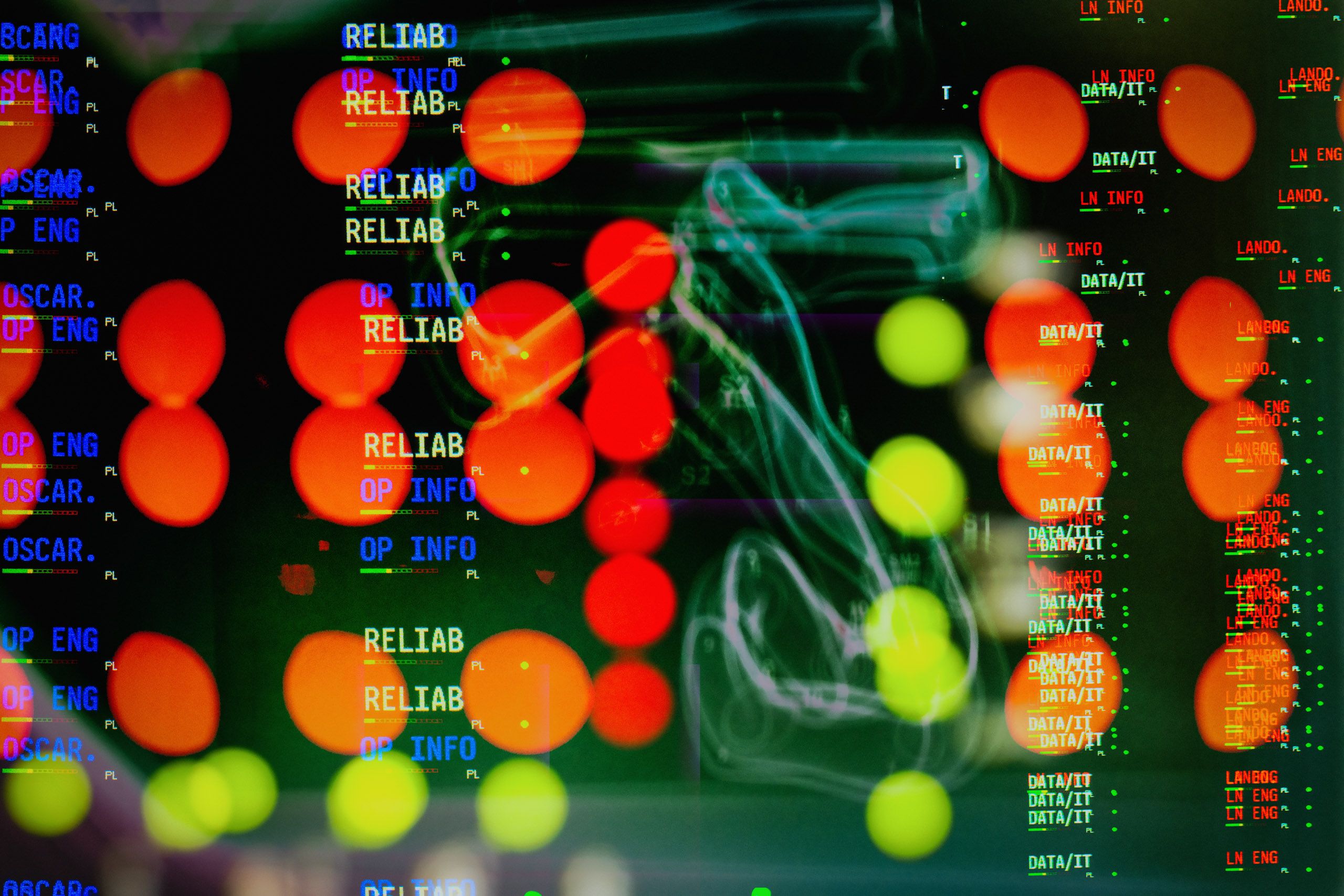
The journey starts at the track. Before every race, McLaren builds a mobile data center on-site, powered by two 38U server racks, telemetry receivers for the car’s data, Cisco routers and switches, and over 250 terabytes of storage. The whole thing weighs nearly a ton. “We actually have six sets of our garage in sea freight, so they’re constantly floating around the world, Tetris-style,” Keyworth says. The setup is so crucial to how the two drivers on the track perform on Sunday that insiders have given it a fitting nickname: the third car.
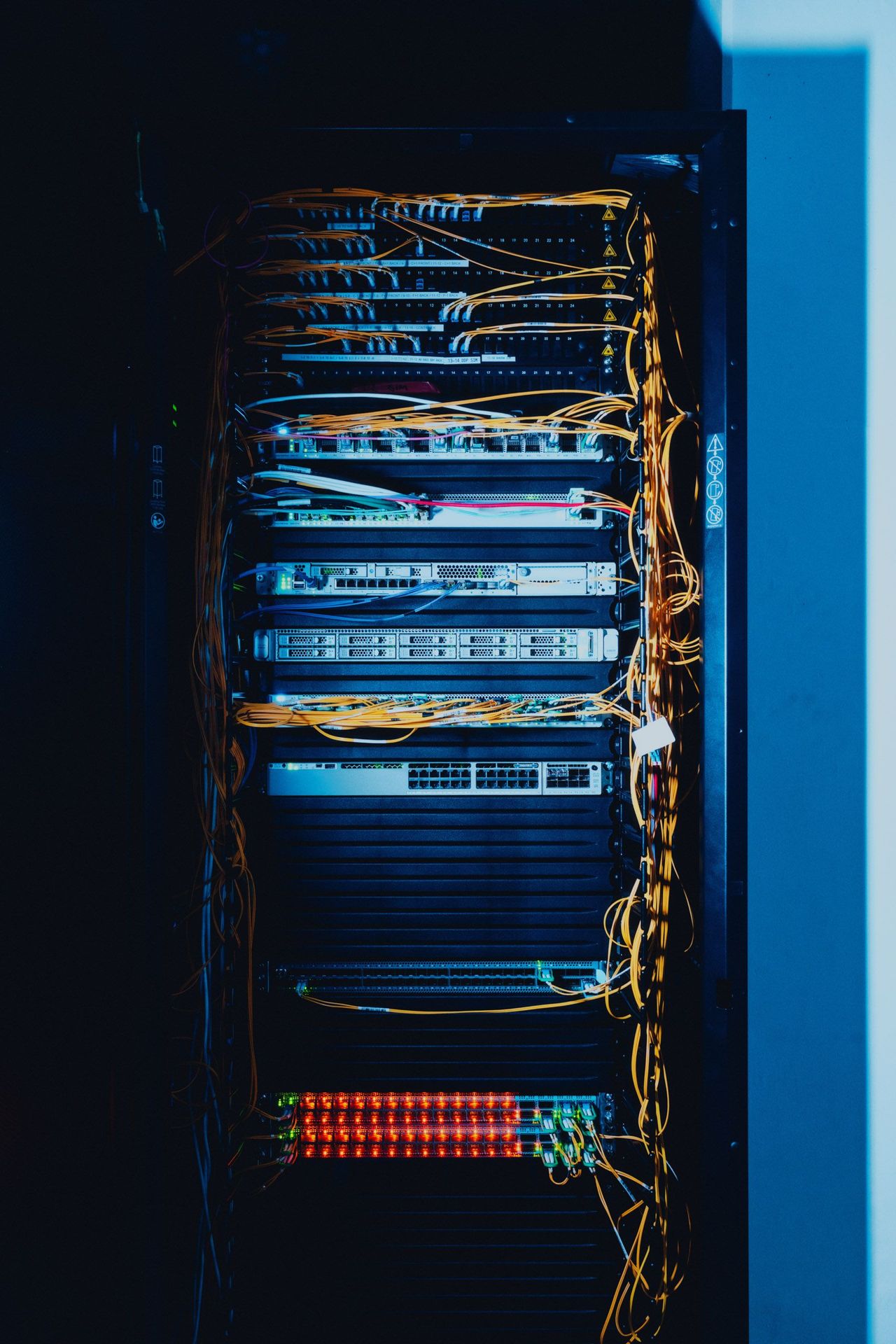
From the sensors, the data speeds to the race engineer, the only person who talks directly with the driver during the race, and to the mechanics in the pit. It goes out to systems engineers, who monitor the sensors themselves, and to the team principal. Distance still costs time. Data takes about 20 milliseconds to travel from Zandvoort to Woking, and as long as 280 from Melbourne.
Telemetry is like reading music.
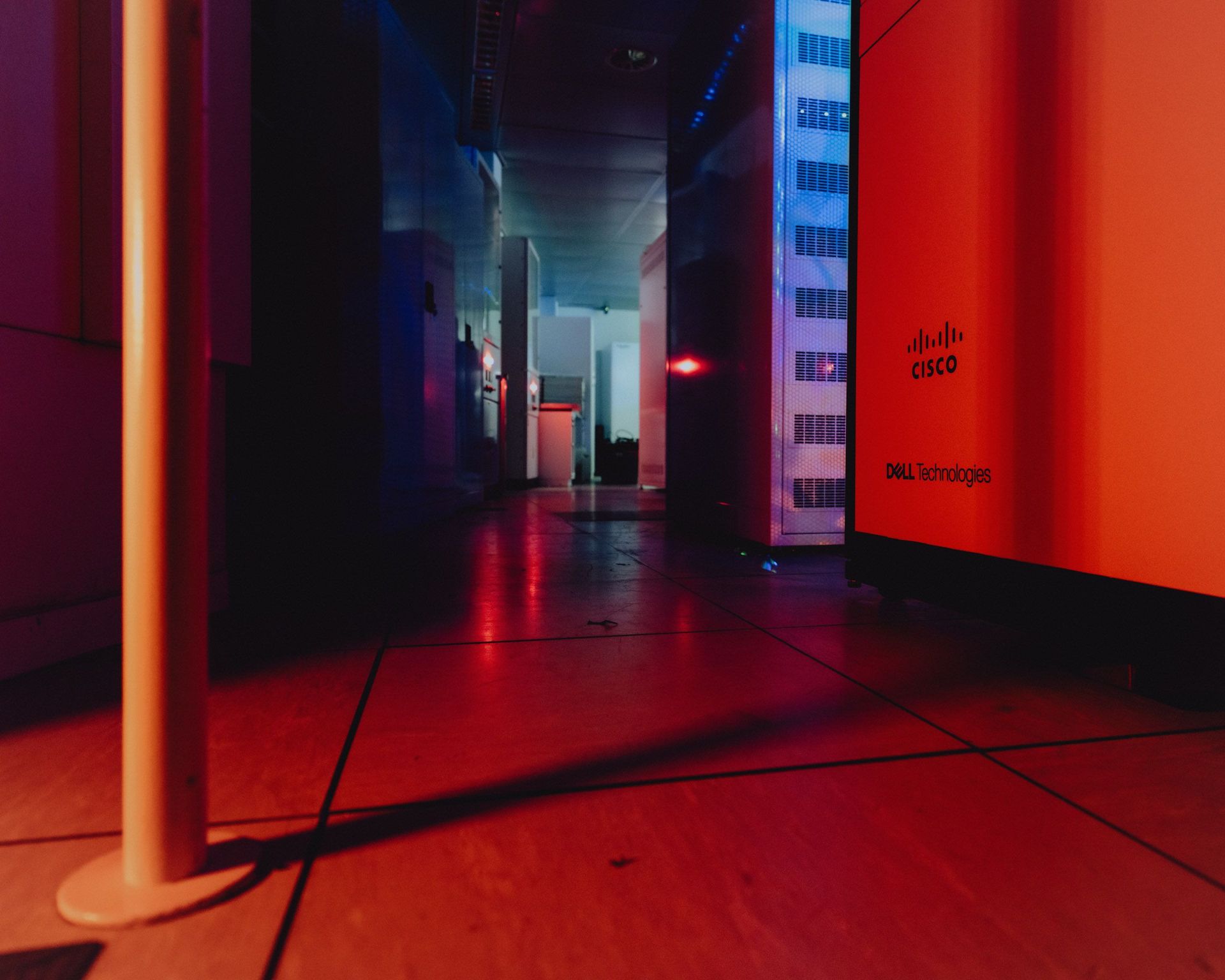
With all that data, how does one know what to prioritize? It’s all about looking for anomalies. “Telemetry is like reading music,” Keyworth says. “If you’re really proficient at it, you can see the pattern recognition in the data and quickly identify what is potentially causing it.” Keyworth describes telemetry as those squiggly lines you see on an engineering screen as the cameras pan around, and a shift in one of those lines might tell the engineer that the tyres are decaying faster than usual, which then sparks a rapid-fire series of simulations. If we change tyres now, how long would they last? Is there enough time to pit without losing position? And there’s always the human component. Maybe the pit wall wants Lando Norris to pit, but Norris wants to go three more laps. “It’s always a balancing act between what the human feels versus what the simulation is telling us to do,” Keyworth says.
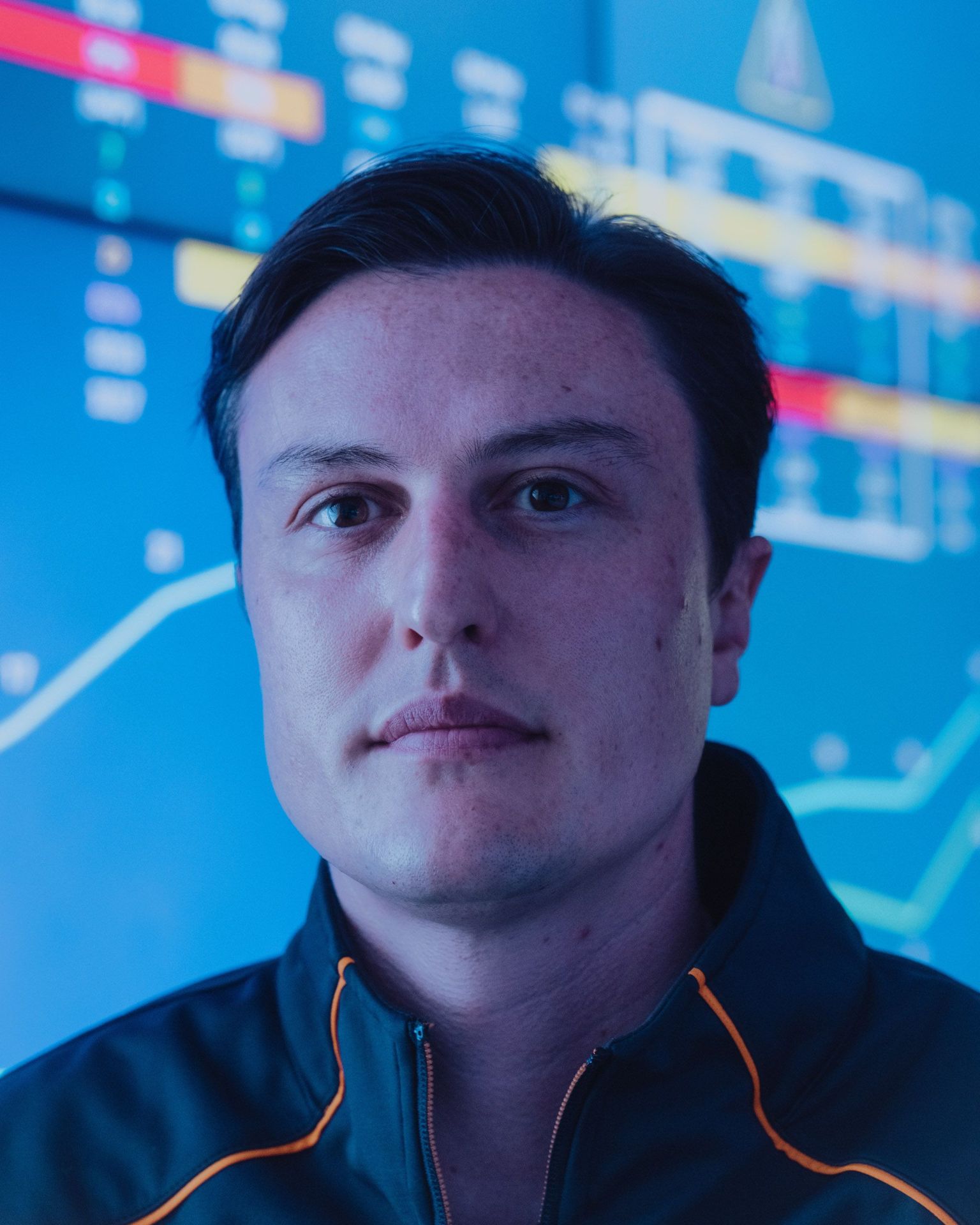
At the same moment, that data reaches Mission Control. And it keeps moving in both directions. Engineers at the track pull simulations and historical data from Woking, Woking pulls live data from the track, and by the end of a race weekend more than 13 terabytes have passed between them. “They’re reading eight and a half times more data than what the cars are producing,” says Ed Green, Cisco’s Portfolio CTO. “Looking at potentials, looking at simulations, looking at additional data. They’re constantly sharing.”
All of it goes into McLaren’s archive, which holds four decades worth of race information, dating back to the days when a car carried only 18 or 20 sensors. Nothing is thrown out. When the calendar brings back a circuit no one has raced in a decade, an engineer can pull McLaren’s data from the last visit and see how its driver took each corner. “When people see a race on television, they think that the team is only using the data at that point in time,” Keyworth says. “But that data has such longevity in this sport.”
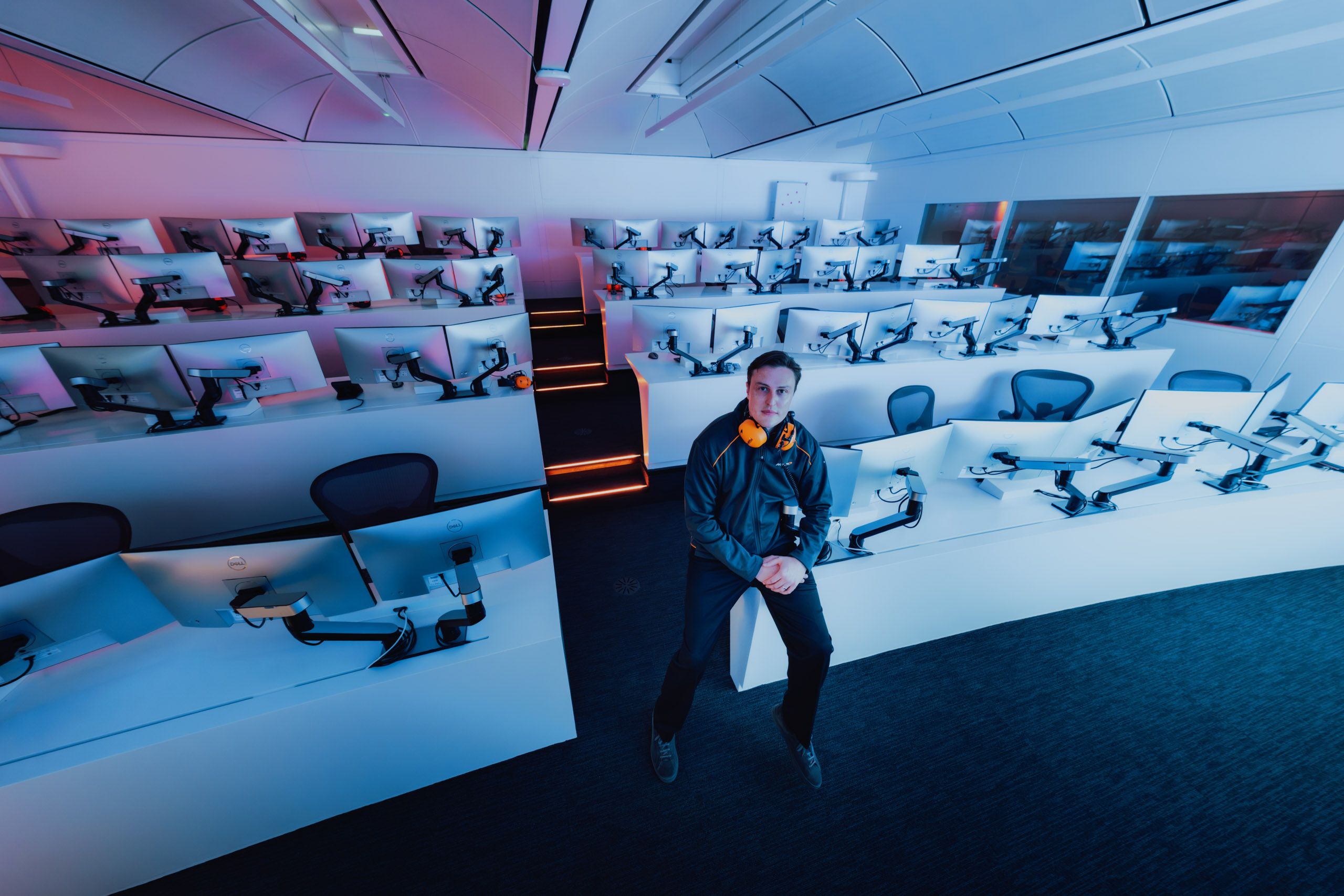
If the garage on race day is a blur, Mission Control is calm by design. There, 30 engineers sit before dozens of screens in climate-controlled comfort, and in some ways they see more of the race than the people standing beside the car. Keyworth makes it out to seven or eight races a year, but he’d rather be at Mission Control with his nose in the data. “It’s a lot calmer than the track,” he says. “You can still feel the stress of the moment. But we create this environment to make sure that these people can remain the voice of reason to the track.”
We store it all. We use it all. The more you've got, the better you'll be on the track.
In 2024, McLaren replaced its entire network at Woking, upgrading every switch and wireless access point with new Cisco hardware. The previous system was slower and prone to jitter. The new one is up to 50 times faster, with 100 times the capacity. At the MTC, nearly everything is secret, from car designs to the results coming out of the compound’s wind tunnel. The data is encrypted end to end and guarded by AI-assisted cybersecurity that covers everything from the server racks at the track to the phones in crew members’ pockets.
In Formula 1’s early decades, data collection meant a team manager following the car with binoculars while someone else clicked a stopwatch and wrote lap times by hand. Development ran on instinct and what the driver could tell you. “Now you can make big overall performance steps because you’ve got all this information coming in,” Keyworth says.
When the race is over the traveling data center is speedily torn down, but the data itself remains as important as ever. “Data is gold,” Keyworth says. “So yeah, we store it all. We use it all. The more you’ve got, the better you’ll be on the track.”
Editor's Note: Some numbers were updated for this story and may differ from what is seen in the print version of the magazine.