


Inside a Cisco lab in Santa Monica, three engineers are betting that the future of quantum computing won’t be decided by whoever builds the most powerful machines, but by whoever connects them.
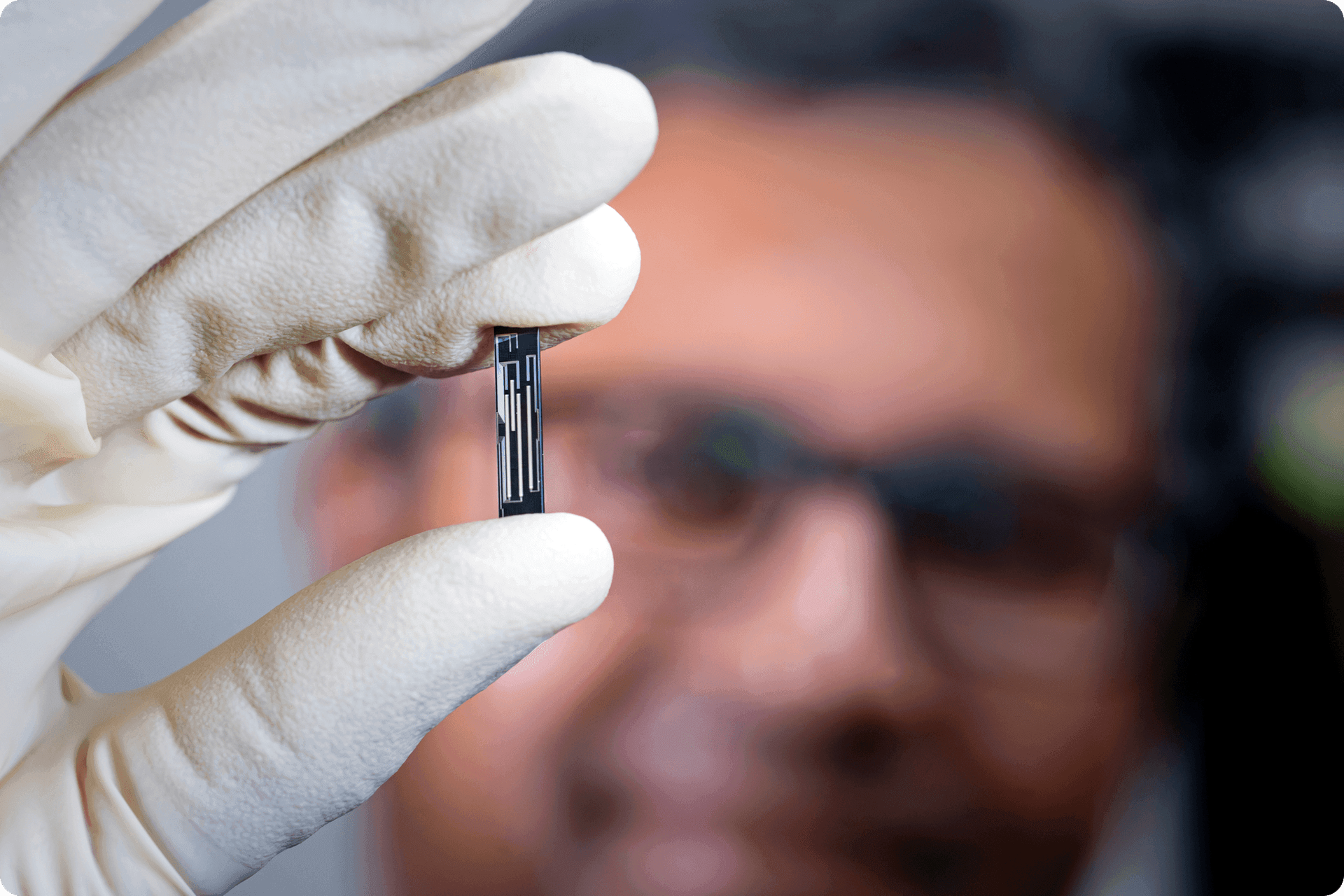
Sitting across the kitchen table from his college-aged daughter, Vijoy Pandey took a quantum chip from his jacket pocket and pressed it into her palm. Smaller than a postage stamp, mirror-bright on one face and matte on the other, it was etched with patterns so fine they shone only as a flicker of iridescence. “You are holding a piece of history,” he told her.
The lineage, as Pandey sees it, runs straight: computers expanded the reach of a single mind; the internet, once Cisco’s switches helped lay the fabric, connected billions of people and machines. The chip in his daughter’s hand belongs to the next generation — a device that could one day connect quantum computers and quantum sensors into a quantum internet, a network capable of making humanity’s hardest computational problems, from drug discovery to new materials to climate modeling, tractable.
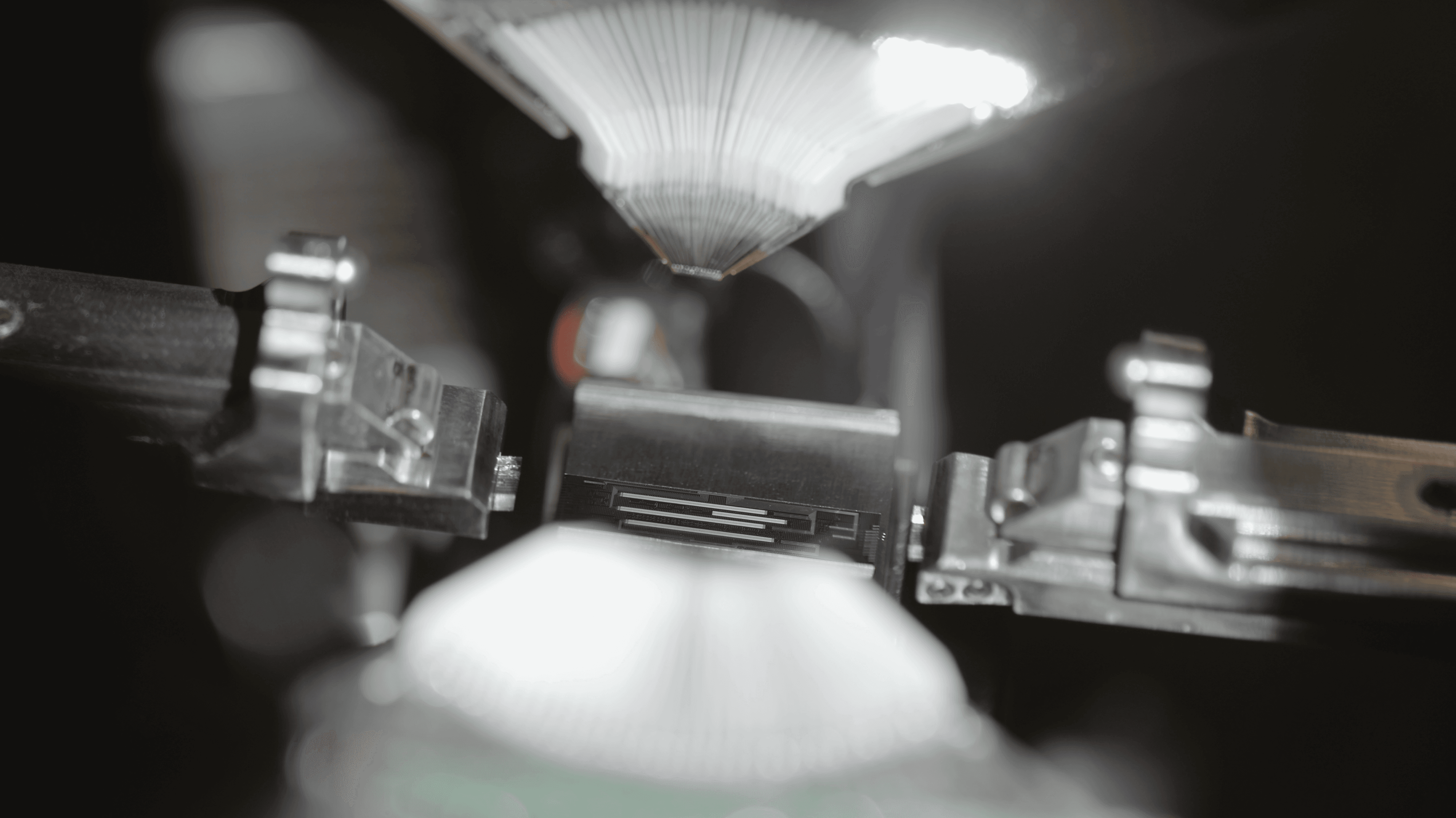
The chip itself was a non-working, or “dead,” prototype from an early fabrication run, kept because it was the only one the team could spare. Its working siblings, humming on a bench inside Cisco’s quantum lab in Santa Monica, are the first universal quantum switch chips of their kind. They route entangled photons between quantum computers while preserving the entanglement itself — at scale, preserving fidelity, at room temperature, over the same telecom fiber already threaded through nearly every major data center on earth.
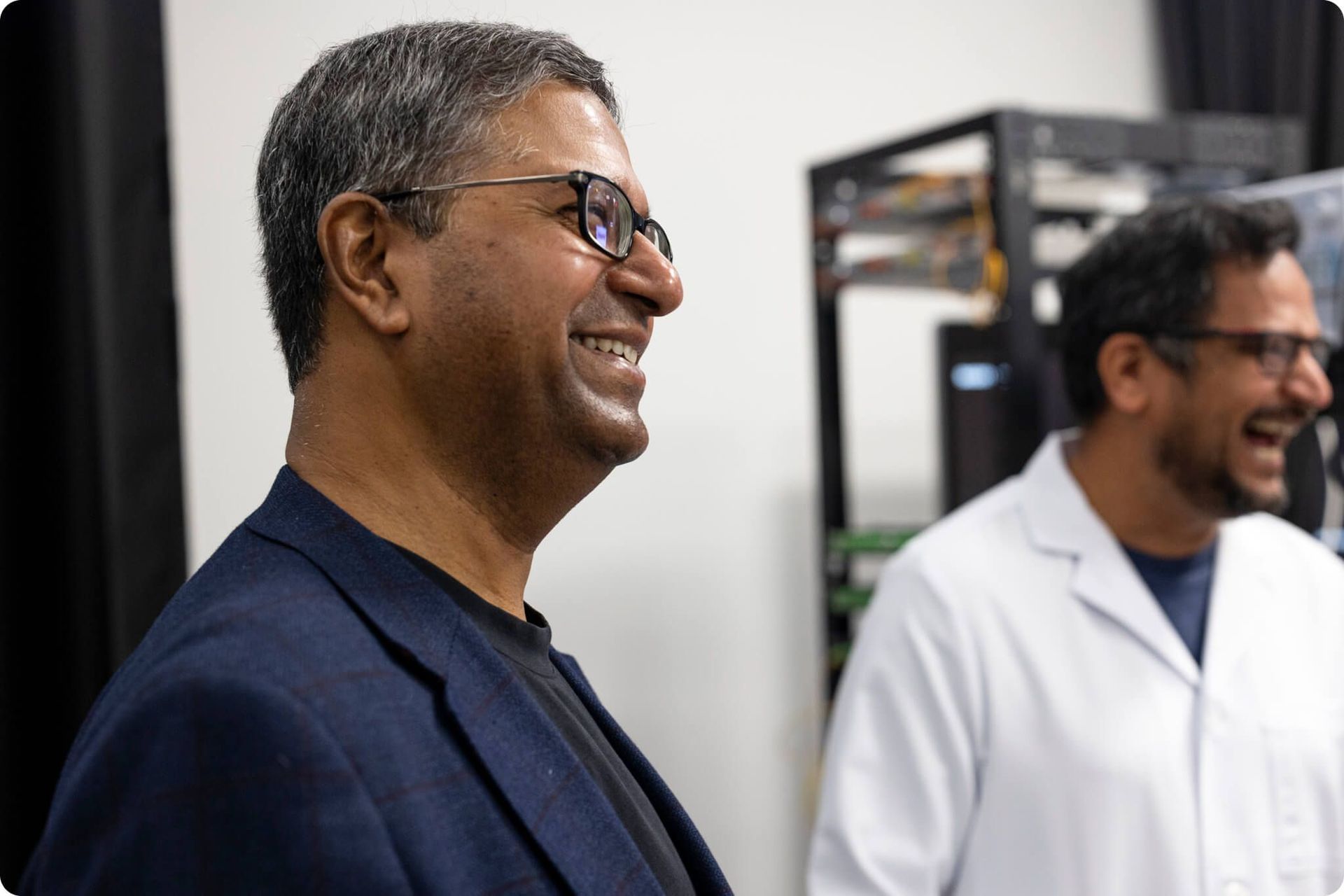
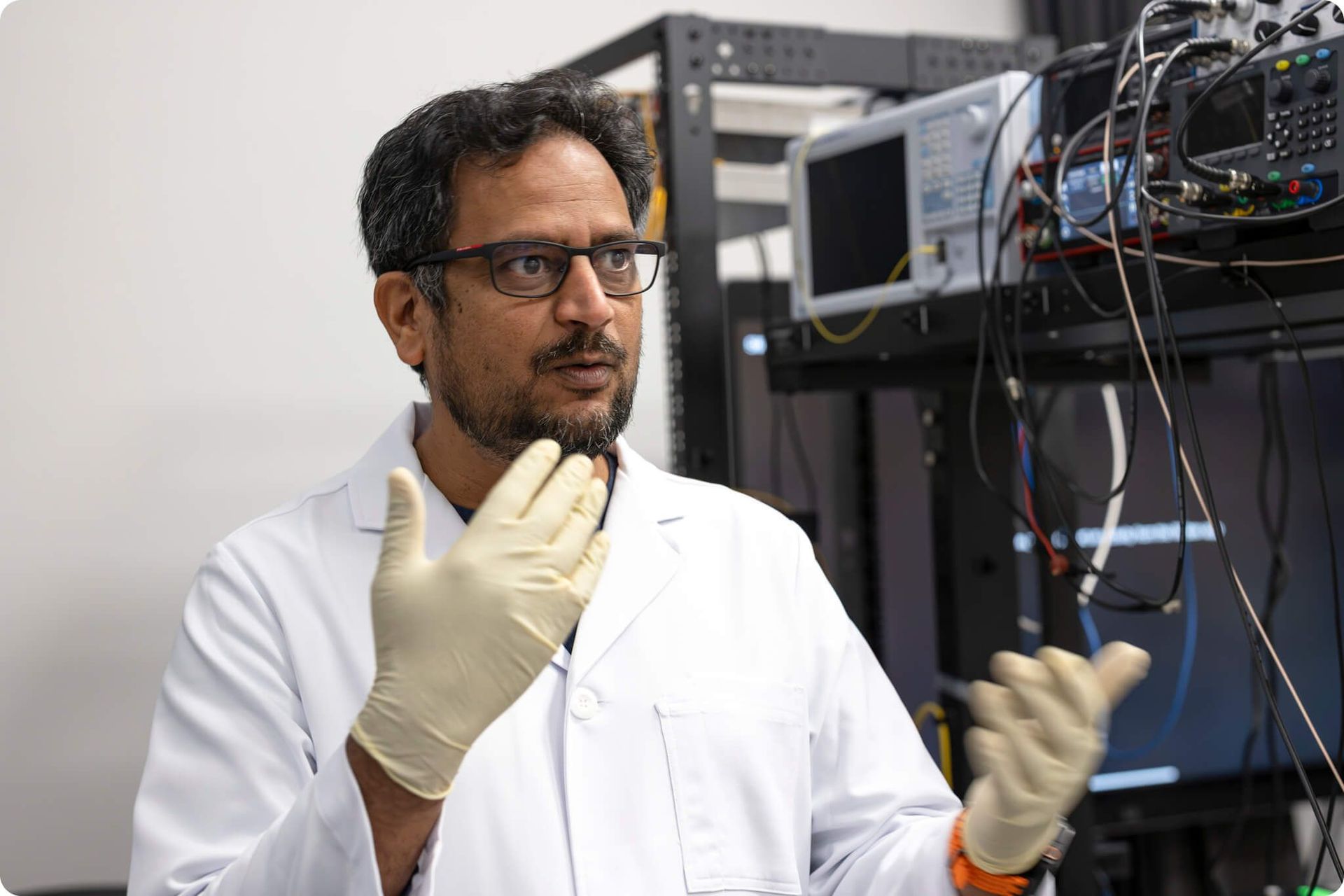
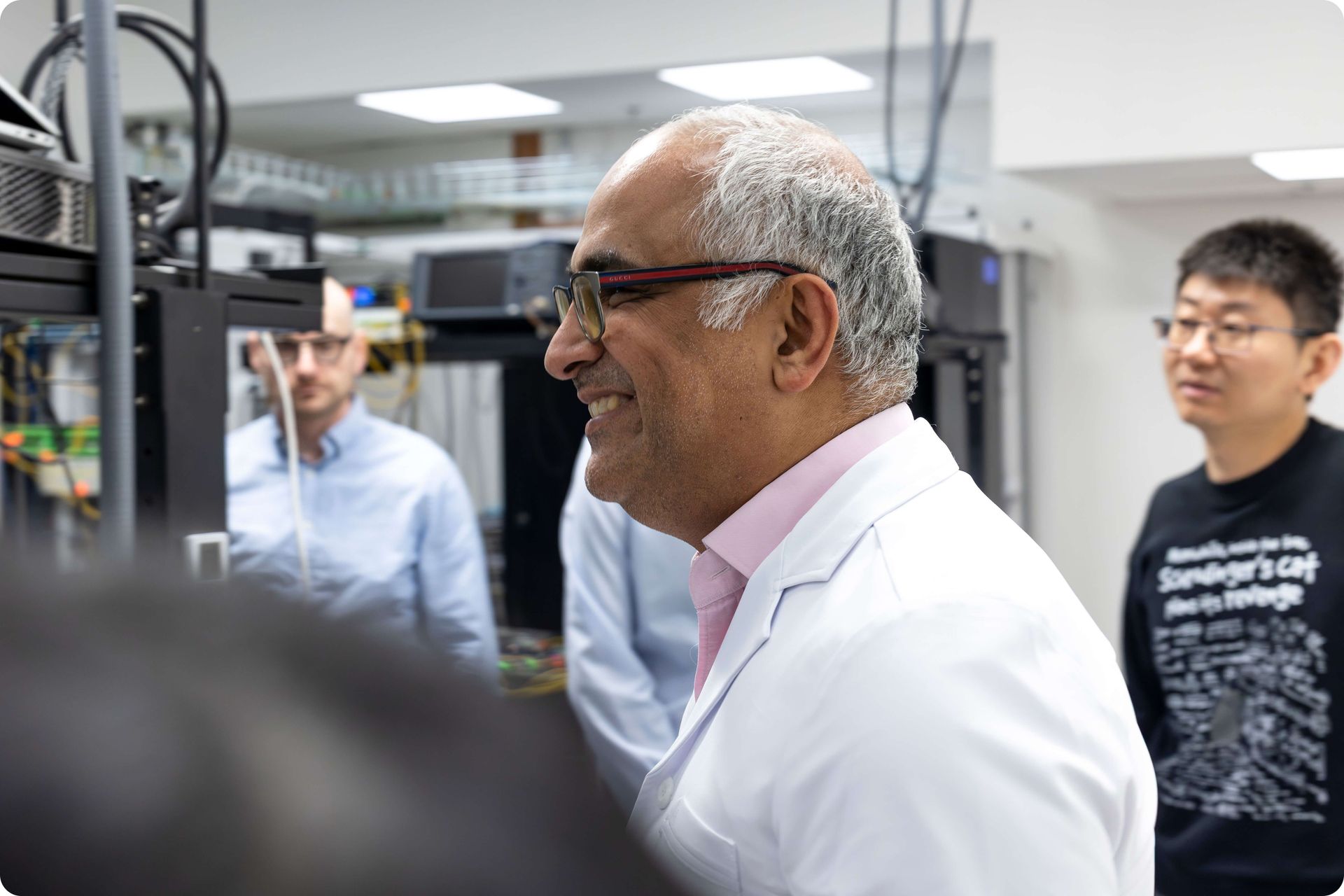
The breakthrough is not the work of any one person. It is shared between teams in Silicon Valley and Santa Monica, led by Pandey; Ramana Kompella, head of Cisco Research; and Reza Nejabati, head of Quantum Research & Quantum Labs. Together they are betting that the next era of computing will not be driven by a lone machine, no matter how powerful, but by the fabric that lets many machines work as one.
Leaping past 'classical' limits
To understand why this quantum chip might someday belong in a museum, it helps to begin with Richard Feynman.
Pandey is a devotee of Feynman, the Nobel Prize–winning physicist whose iconoclastic lectures made him a cultural figure. The line Pandey reaches for almost reflexively is “Nature isn’t classical, dammit.” Feynman said it during a 1981 lecture at MIT, and the argument beneath the provocation was simple enough to survive the decades: If reality itself operates according to quantum mechanics, then to simulate reality, you need machines that operate by the same rules.
Classical computers are good at many things. But certain problems, from molecular interactions to protein folding, do not merely get harder as they scale. They explode in size. And computing demands can spiral well beyond practical limits.
Quantum computers change the equation — in theory. But the problems researchers hope to solve will require hundreds of thousands, if not millions, of qubits. Even the best quantum systems today operate with roughly a thousand qubits.
There are two ways to close that gap. The first is the vertical path: build ever larger quantum computers. That is the strategy pursued by major tech players and a generation of startups. The industry, as Pandey sees it, is still trying to build the great lone wolf.
The team at Cisco believes that even the strongest wolf needs a pack.
A lab fit for 'spooky action'
The lab in Santa Monica began as a strategic bet.
In 2021, Kompella, Cisco Fellow and the head of Cisco Research, began building Cisco’s quantum program from scratch. The company had essentially zero internal quantum expertise. His first task was to map the field and decide where a networking company could make a credible, necessary contribution.
The answer was not qubit fabrication. It was not the race to build the single biggest quantum computer. It was the network itself.
“Cisco is a networking and security company,” Kompella said. “We should rightfully own quantum networking and quantum security.”
The thesis sounds almost inevitable now. At the time, it was not. Much of the industry was still fixated on the machine. Kompella’s view was that quantum computing would eventually face the same scaling challenge classical computing and AI had already solved through interconnection.
The best way to scale quantum computing is to interconnect quantum processors. No single quantum processor will ultimately satisfy these computational needs.
Pandey’s job was to keep the idea from staying suspended in theory. As an SVP/GM inside Outshift, Cisco’s engine for taking emerging technologies from zero to one, he turned the quantum internet from a research question into an incubation bet with a lab, a team, a roadmap, and a deadline. Outshift’s portfolio spans several of Cisco’s future-facing wagers — the Internet of Agents, cognition and semantics, the quantum internet — but the common thread is the same: identify technologies that could become foundational and push them toward working systems. For quantum, that meant giving Kompella’s strategy a larger frame: not just a scientific milestone, but a new execution layer.
What the strategy needed next was a builder.
Kompella recruited Nejabati, who joined Cisco in March 2024 after more than a decade at the University of Bristol, where he led the High Performance Networks Group and became one of the UK’s foremost researchers in quantum networking. He had also co-founded Zeetta Networks, a startup that gave him rare experience moving between academic physics, engineering, and commercial infrastructure.
Cisco had leased the Santa Monica space, but the lab itself did not exist. The full lab layout, the optical benches, the cryogenic-detector configuration, the fabrication relationship with UC Santa Barbara, the experimental architecture now occupying the building — all were largely Nejabati’s design as head of Quantum Research and Quantum Labs.
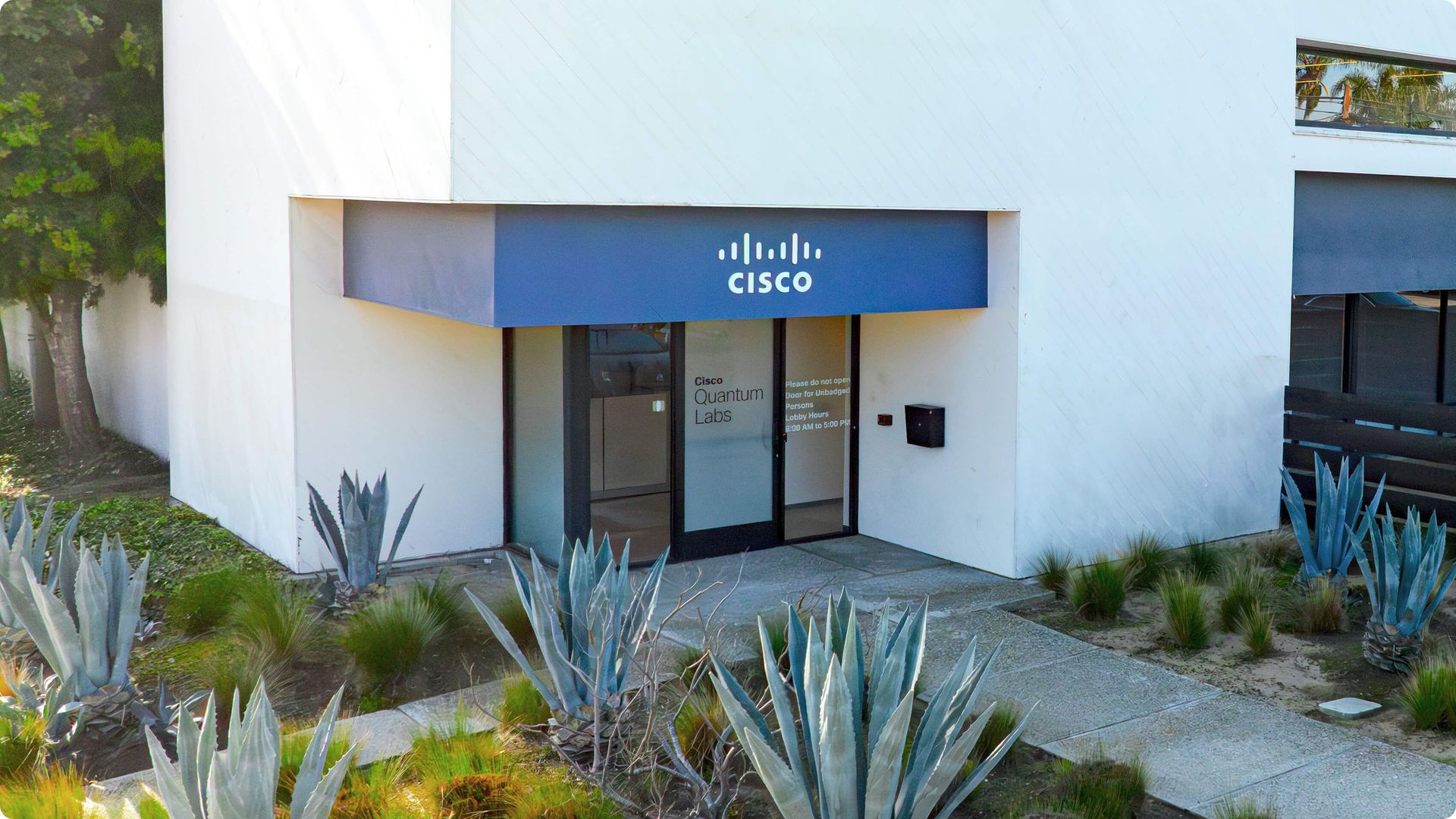
Pandey has visited quantum labs he calls “cathedrals.” Cisco’s, by comparison, he describes as “garage-ish. It’s a true maker space: a low building with an airlock at the entrance to the lab, green laser lines cutting across optical benches, and detectors cooled by liquid helium to temperatures below one kelvin.
What happens inside can sound borderline absurd even to the people building it. You detect photons at temperatures otherwise found only in deep space. You preserve entanglement while the outside world constantly tries to collapse it. You move quantum information across a switch fabric using what Einstein once called “spooky action at a distance.”
“It really does feel like magic. And we’ve harnessed it to do something useful.”
Building a quantum team
The three men arrived at quantum networking by different routes but were shaped by a similar belief: that the right combination of hardware, code, physics, and imagination could alter the scale of what human beings are able to do.
Pandey grew up in Calcutta, building circuits in fifth grade, years before he ever touched a computer. In 1984, as India’s markets began to open, his school acquired a handful of BBC Micros running BASIC on 64 kilobytes of RAM. Pandey and a friend decided to build a chatbot.
His friend was a Beatles obsessive and insisted on naming it Billy Shears, after the fictional bandleader introduced at the start of Sgt. Pepper’s Lonely Hearts Club Band. Pandey, a committed Pink Floyd fan, argued for a different reference. They flipped a coin. Pandey lost.
Four decades later, working with a modern open-source AI model, Pandey built another agent. This time he named it Arnold, after “Arnold Layne,” Pink Floyd’s first single. The old argument had finally resolved itself.
The through line from circuits to agents ran through infrastructure. Before Cisco, Pandey spent years at Google as an engineering lead in technical infrastructure focused on distributed systems, compute clusters, machine-learning training infrastructure, and high-performance networks. Kompella, too, had a stint at Google, as a network architect. Both men had built scale-out systems long before Cisco’s quantum bet, and that experience would shape what came next.
Kompella came to networking through systems rather than circuits. After growing up in what he calls “a sleepy coastal town in India,” he arrived at Stanford University in 1999, just as a generation of computer scientists was realizing that the internet was becoming less a technology than a substrate for modern life. To Kompella, the scale of the transformation felt comparable to the arrival of aircraft, nuclear energy, or other foundational technologies that permanently altered the trajectory of civilization.
What fascinated him were the protocols and architectures that would allow billions of machines to find and communicate with one another. A PhD at UC San Diego followed, then Google (where he met Pandey), a professorship at Purdue, and then Cisco in 2015. In 2020, Kompella joined Pandey’s emerging-technologies group, the team tasked with looking past the current product cycle toward the next decade of infrastructure.
Nejabati grew up in Tehran constantly trying to build things: robotics projects, physics experiments, optical systems. Talented enough at both physics and computer science that he never felt forced to choose, what captivated him instead was light itself — how it traveled, why nothing could move faster than it, and how the laws of physics behave less intuitively near those limits.
He left for graduate work in the United Kingdom and stayed. Long before quantum networking became fashionable, Nejabati received a five-year UK government fellowship in the field, back when only a handful of researchers were discussing a quantum internet. Cisco eventually offered him the chance to build something larger than a paper or a prototype: an actual lab to test whether those ideas could scale into infrastructure.
Cisco has the muscle to make it happen.
Diverse talents, rare chemistry
The chemistry between the three men is something they discuss with unusual candor.
“All three of us are deeply rooted in networking,” Kompella said. “Vijoy comes from distributed systems. I come from a high-speed networking technologies and large-scale networking background. Reza comes from photonics and optical switching. We think about systems at different layers of the stack.”
With Pandey, a deeply technical problem rarely stays trapped at the technical level for long. “I can explain something highly complex,” Nejabati said, “and Vijoy can immediately map it to the real-world problem.”
With Kompella, the exchange works differently. Nejabati brings the quantum physics; Kompella brings decades of thinking about the architecture of the classical internet and the questions required to bridge the two worlds. What is the quantum equivalent of a TCP/IP packet? What does routing look like when the thing being routed is an entangled state instead of ordinary data?

Most of those answers do not yet exist. On many days, the work consists of trying to invent them.
Nejabati also notes that neither Pandey nor Kompella has much patience for vague theorizing. “You cannot walk into Vijoy’s office with too loose of an idea,” he said. “You have to think deeply about the problem, how you want to solve it, and why it matters. He sees right through any BS.”
Quantum complexity at practical scale
All that strategy eventually must pass through a single fact of physics.
It all starts with a laser pumping light into the entanglement source chip; a piece of technology small enough to vanish beneath a fingertip. Inside, each incoming photon is split into a pair of lower-energy photons that remain entangled — linked, no matter how far apart they travel, so that measuring one instantly tells you something about the other. The chip emits roughly two hundred million such pairs per second, with near-perfect accuracy, on less power than a single pixel on a laptop screen.
Then those photons have to go somewhere.
That is where the quantum switch chip comes in. In an ordinary network, a switch reads each packet of data and sends it along the right path. A quantum switch must do something more delicate: route the information without ever looking at it. The moment a quantum state is measured, the thing that makes it useful collapses.
The Cisco switch is built to avoid that collapse. It accepts an incoming quantum signal, but it also translates it into whatever form the next device can read and sends it on — all without measuring the signal itself. That matters because quantum computers and sensors come in many varieties, and each one speaks a slightly different quantum dialect. The switch lets them talk to each other without forcing every machine to use the same one.

That is the “universal” part. Without a switch, connecting quantum machines at scale would mean stringing fragile, dedicated links between every pair of devices. A thousand-node quantum data center built that way would need roughly half a million direct connections. A switching layer collapses that complexity (and the related waste), allowing many machines to share the same expensive hardware — entanglement sources, ultra-sensitive detectors — rather than stranding it on links that sit idle most of the time.
Most quantum computers run at temperatures close to absolute zero, colder than deep space. That means the machines dedicate a large percentage of their energy consumption to keep the qubits cold enough to function.
In a significant advance, the Cisco switch runs at room temperature and carries quantum information across the same telecom fiber already strung through the world’s data centers. No bespoke cryogenic network. No exotic cabling. The idea is not to build a separate, premium network for quantum computing, but to make quantum networking fit into the infrastructure the world already knows how to operate.
Together, the source and the switch now form the early architecture of a quantum networking stack. The first Entanglement Source chip came out last May. Software followed in October. The switch completes the next essential layer. Only a controller, to tie everything into a single operable system, remains — and that, the team says, is not far off.
“Nothing else like this has ever been done before,” Pandey told his team after the switch ran end-to-end.
Harnessing quantum for 'civilization-level' problems
The story the three men tell about what they are building tends to converge in the same place: utility.
For Nejabati, that means medicine. The mission he wants to live to see is the ability to model a person’s genetics, the genetics of their disease, and the candidate drugs against them, in months rather than years. “That gives us a much better chance of beating many cancers,” he said.
For Kompella, it is the hundred- to thousand-fold gap between what today’s quantum machines can do and the problems that matter. He argued, “The world does not need a quantum computer that can win a benchmark. It needs ones that can do essential work.”
Pandey thinks about this on what he calls “civilization scale,” the layer that runs underneath everything humans do. A network not just for faster computation, but for new forms of sensing, security, modeling, coordination, and discovery that become possible only when quantum systems are no longer isolated machines.
The chip lives now in his daughter’s possession, a keepsake from her father’s lab — a historical artifact from a technology that is only now starting to arrive. Pandey grew up writing chatbots on machines with sixty-four kilobytes of memory in a country just opening its doors to international technology. Kompella grew up watching the network pull the world closer together. Nejabati grew up trying to manipulate light. Three lives, three variations of one preoccupation, one lab in Santa Monica.
Somewhere on a bench inside that lab, another chip is routing entangled photons across a fiber that could, with the right firmware and the right patience, eventually stretch across a data center, across a country, or across a parallel network taking shape alongside the internet we already know.
It is, as Pandey says, historic. The lone wolf is still out in front. But in Santa Monica, the pack is beginning to run.


